
Focaccia is an Italian flatbread strongly associated with Liguria and the city of Genoa, where traditional focaccia is known for its generous use of olive oil, golden surface, and characteristic dimples. In Genoa, focaccia is not limited to lunch or dinner, it is also commonly enjoyed at breakfast, sometimes alongside cappuccino.
This same-day focaccia takes inspiration from the rosemary, olive oil, and flaky salt combination that many people recognize as the classic focaccia experience. Although traditional regional recipes and fermentation methods vary, this accessible version uses instant yeast and warm water to create a flavourful loaf in approximately four hours instead of requiring an overnight rise.
The dough contains 420 millilitres of water for 500 grams of flour, giving it a high hydration level of approximately 84%. That moisture helps create a soft, tender crumb with large, irregular air pockets. Two short stretch-and-fold sessions strengthen the dough without traditional kneading, a hands-off method also used in modern big-and-bubbly focaccia recipes.
Fresh rosemary, flaky salt, and extra-virgin olive oil keep the topping simple, aromatic, and versatile. Serve this focaccia alongside pasta, soup, roasted meats, or a charcuterie board, or slice it horizontally to make a large focaccia sandwich. The crisp bottom, olive oil–rich crust, and airy centre also make it delicious on its own.
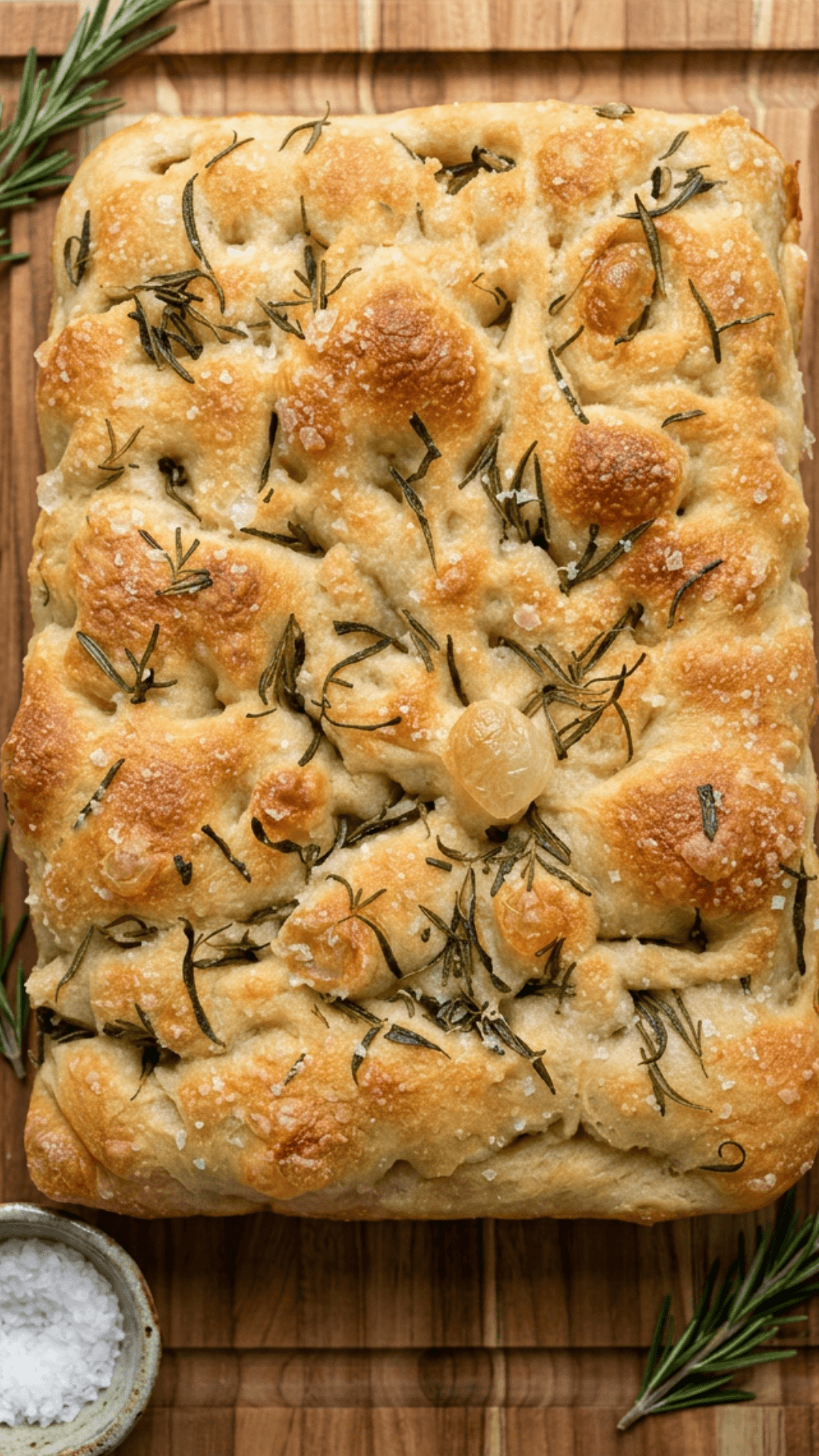
Easy Same-Day Rosemary Focaccia Recipe
Equipment
- 9×13 metal baking tray
Ingredients
Focaccia Dough
- 500 g White bread flour
- 420 ml Warm water, approximately 100–105°F
- 4 g Instant yeast
- 15 ml Extra-virgin olive oil, approximately 1 tablespoon
- 5 ml Honey or granulated sugar, approximately 1 teaspoon
- 10 g Fine sea salt, approximately 2 teaspoons
For the Pan and Topping
- 3-4 tbsp Extra-virgin olive oil, divided
- 2-3 Sprigs fresh rosemary
- 1.5-2 tsp Flaky sea salt
- Additional olive oil for your hands
Instructions
1. Mix the wet ingredients
Add the warm water, honey, extra-virgin olive oil, and instant yeast to a large mixing bowl. Whisk until the honey has dissolved and the yeast is evenly distributed.Instant yeast does not need to foam before continuing. The purpose of whisking is simply to distribute it evenly throughout the water.2. Add the flour and salt
Add the bread flour and fine sea salt to the bowl. Mix with a sturdy spoon, dough whisk, or your hand until no dry flour remains.The dough will look wet, loose, and sticky. This recipe has approximately 84% hydration, so resist the urge to add extra flour.Cover the bowl and let the dough rest at room temperature for 15 minutes.3. Complete the first stretch-and-fold
Lightly wet or oil your hand. Reach underneath one side of the dough, gently stretch it upward, and fold it over the centre.Rotate the bowl one-quarter turn and repeat. Continue until you have completed four folds around the bowl.Cover and rest for another 15 minutes.4. Complete the second stretch-and-fold
Repeat the same four-sided stretch-and-fold process. The dough should already feel smoother, stronger, and slightly more elastic.Cover the bowl and let the dough rise at room temperature for 1½ hours.By the end of this rise, the dough should look puffy and noticeably larger, with bubbles beginning to form around the surface and sides. It does not have to fully double.5. Prepare the baking tray
Line a 9-by-13-inch metal baking tray with nonstick parchment paper if desired.Pour approximately 2 tablespoons of extra-virgin olive oil into the tray and spread it generously across the bottom and into the corners.A metal tray will help the bottom of the focaccia become crisp and deeply golden.6. Transfer the dough
Carefully tip the risen dough into the prepared tray. Turn it once so both sides receive a light coating of olive oil.Use oiled fingertips to gently encourage the dough toward the corners. Do not force or tear it. If it springs back, leave it alone—it will naturally relax and spread as it proofs.Cover the tray and let the dough proof at room temperature for another 1½ hours.The focaccia is ready to bake when it looks inflated, bubbly, and noticeably jiggly when you gently shake the tray.7. Preheat the oven
During the final 30 minutes of proofing, preheat the oven to 430°F or 220°C.Place the oven rack in the lowest position. Baking closer to the bottom heating element helps create a crisp, well-browned base.8. Add the rosemary topping
Remove the rosemary leaves from the stems.Drizzle 1–2 tablespoons of extra-virgin olive oil over the dough. Coat your fingertips with olive oil and press them firmly into the dough to create deep dimples.Push your fingers almost to the bottom of the tray without tearing the dough. Try not to flatten the air bubbles that have formed between the dimples.Sprinkle the fresh rosemary and flaky sea salt evenly over the top.9. Bake the focaccia
Bake at 430°F on the lowest rack for 20-25 minutes or until golden brown.The focaccia is ready when: The top is deeply golden. The edges are crisp and browned. The bread has pulled slightly away from the sides. The bottom is firm and golden when carefully lifted.If the top is browning before the bottom is crisp, loosely cover the top with foil and continue baking for a few more minutes.10. Cool and serve
Let the focaccia cool in the tray for approximately 10 minutes. Carefully lift or slide it onto a wire rack so steam does not soften the bottom.Allow it to cool for another 10–15 minutes before slicing. Serve warm or at room temperature.