Ingredients
Equipment
Method
Method One: Preparing Dried Chickpeas
1. Soak the chickpeas overnight
Place the dried chickpeas in a large bowl and add the teaspoon of baking soda.Cover the chickpeas with at least three times their volume of cold water. The chickpeas will expand considerably as they soak.Cover the bowl and soak the chickpeas at room temperature for 8–12 hours.2. Drain and rinse
Drain the soaked chickpeas and rinse them thoroughly under cold running water.Discard the soaking liquid.3. Cook until extremely soft
Transfer the soaked chickpeas to a large pot. Add the ½ teaspoon of baking soda and cover with several inches of fresh water.Bring the water to a boil, reduce it to a steady simmer and skim away any foam or loose chickpea skins that rise to the surface.Cook for approximately 45–75 minutes. The exact time will depend on the age and type of chickpeas.The chickpeas are ready when they look slightly broken down and can be crushed effortlessly between your fingers.Drain the chickpeas, reserving a small amount of the cooking water. Do not allow the chickpeas to cool completely.
Method Two: Preparing Canned Chickpeas
1. Drain and rinse
Drain the canned chickpeas and rinse them thoroughly under cold running water.Transfer them to a medium saucepan.2. Boil with baking soda
Cover the chickpeas with several inches of fresh water and add 1 teaspoon of baking soda.Bring the water to a boil and cook the chickpeas for approximately 15–20 minutes.The chickpeas should become extremely soft, and some of the skins may begin separating and floating to the surface.3. Rinse thoroughly
Drain the chickpeas in a fine-mesh strainer and rinse them thoroughly with warm water to remove any remaining baking-soda flavour.Reserve approximately 2 tablespoons of whole chickpeas for garnishing, if desired.
Make the Hummus
1. Blend the chickpeas, lemon, garlic and salt
While the chickpeas are still warm, transfer them to a large food processor or high-powered blender.Add the lemon juice, garlic and salt.Blend for a total of 5–7 minutes, stopping every 60–90 seconds to scrape down the bottom and sides.The chickpeas will initially look thick and grainy. Continue processing until the mixture becomes noticeably smoother.Allow the appliance to rest briefly between blending periods if the motor becomes hot.2. Add the tahini
Add the well-stirred tahini to the chickpea mixture.Process for another 2–3 minutes, stopping once or twice to scrape down the bowl.The hummus may initially become thicker when the tahini is added. This is normal.3. Add the ice water
With the food processor running, slowly add ½ cup of ice-cold water.Continue adding water, one tablespoon at a time, until the hummus becomes pale, creamy and slightly looser than your preferred final consistency.The hummus will firm up as it cools, so avoid leaving it too thick.Depending on the chickpeas and tahini, you may need up to ¾ cup of water.4. Taste and adjust
Taste the hummus and adjust it as needed.Add more lemon for brightness, salt for flavour or cold water for a softer texture.Avoid adding too much raw garlic. Its flavour will become stronger as the hummus rests.5. Plate the hummus
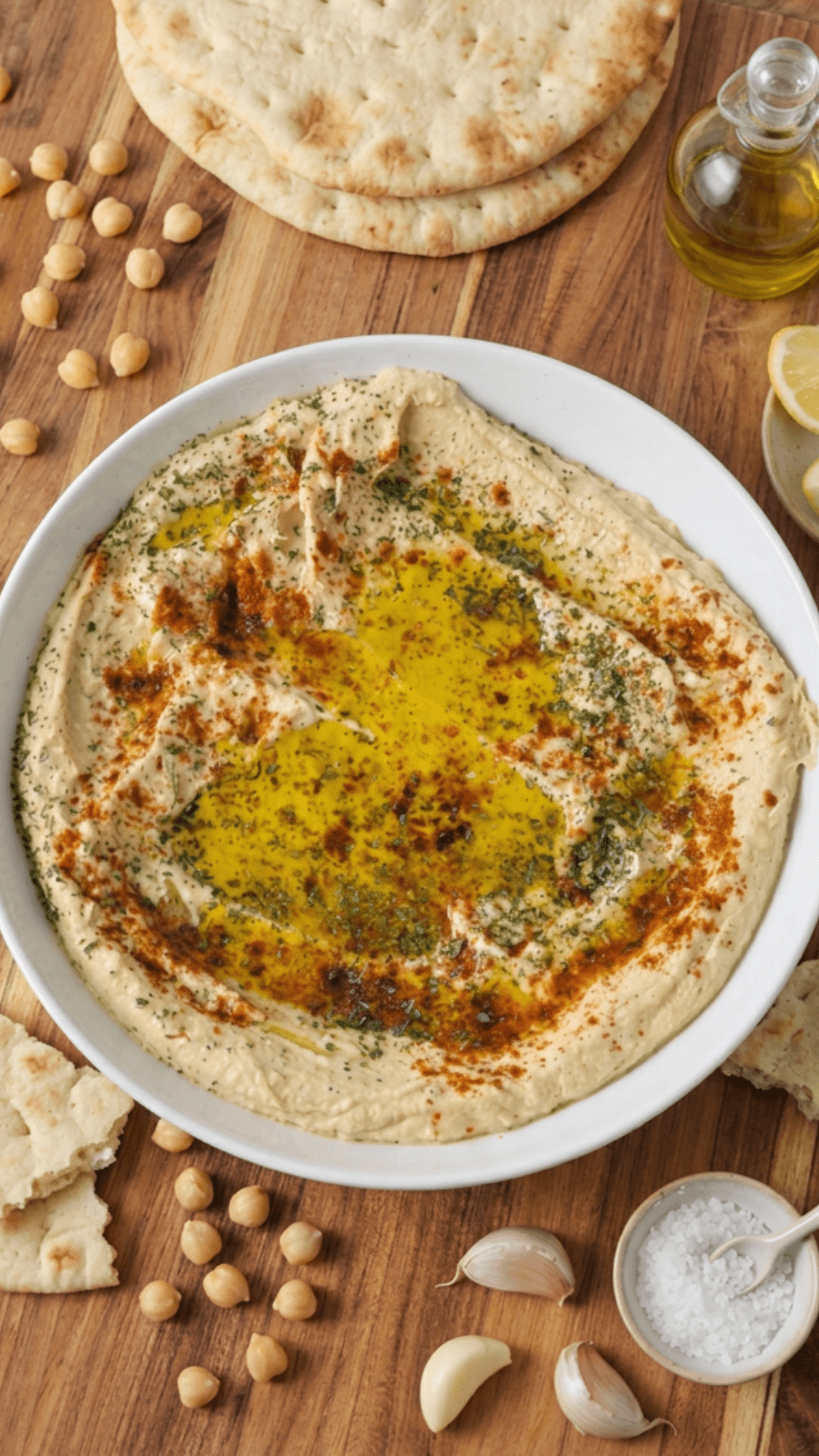
Spoon the hummus into a wide, shallow serving bowl.Use the back of a spoon to create a circular well or several smooth swoops across the surface.Drizzle the extra-virgin olive oil into the centre and garnish with reserved chickpeas, sumac, parsley or Aleppo pepper.For a more traditional presentation, use olive oil primarily as a finishing ingredient rather than blending a large quantity directly into the hummus.